
This is a mystery that we will attempt to solve here. Companies such as Apple will make sure the whole world knows when they add new features to major new platforms, like those added into the iOS 12 or 11. However, that does not mean that a device will not have miscellaneous inclusions or certain easter eggs which can be fun to discover and check out. One feature like this, called Field Test Mode, has been accessible with all versions of iOS till now and is still in iOS 12 or 11 but a very vital part of it has been removed quite suddenly.
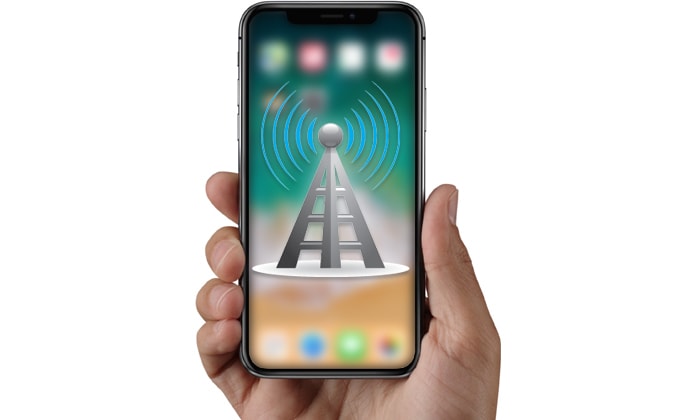
This hidden feature effectively unlocks certain items of interest that would otherwise be locked away and not be accessible through the menu systems to the device. Looking at this totally from an interest perspective, device owners used the feature to convert signal bars on the device to a numerical figure which showed how strong the signal actually was. This number was displayed in decibels; the closer to zero it was, the stronger was the signal.
It indeed was a pretty accurate and interesting method of checking out how various locations and types of environment caused an effect on the signal received on the device. This replacement of a graphical indicator with a numerical one was a novel one.
- Enter Field Test Mode on iOS 12 / 11 Devices
- Steps to Enter Field Test Mode on iPhone Running iOS 11 or iOS 12
- How to Use Field Test Mode in iOS 13 / iOS 12 / iOS 11 to See Number Cell Signal Strength on iPhone
- How do I get the signal numbers to replace the bars on iPhone X, iPhone 11, or iOS 13 / iOS 12?
- Как получить доступ к меню Field Test
- Как на iPhone узнать уровень сигнала сотовой связи в цифрах с помощью скрытого системного приложения Field Test
Enter Field Test Mode on iOS 12 / 11 Devices
While there is no way to be sure of how many people used this feature, but what is for sure is that it has been entirely removed in iOS 12 or 11. The Field Test Mode can still be activated by entering *3001#12345#* on the dial pad and access the menu. However, the conversion from signal bars to decibels has been removed for some reason. Only the company itself can know what the reasons were behind this omission but it remains a possibility that it returns in further iterations of iOS 12. We have discovered a new method to see the true signal strength on your iDevice.
Steps to Enter Field Test Mode on iPhone Running iOS 11 or iOS 12
Follow the steps below to open the Field Test Mode on your iPhone in iOS 12:
Step 1: Open the dial pad and dial *3001#12345#*
Step 2: Press Call. The Field test menu will be opened.
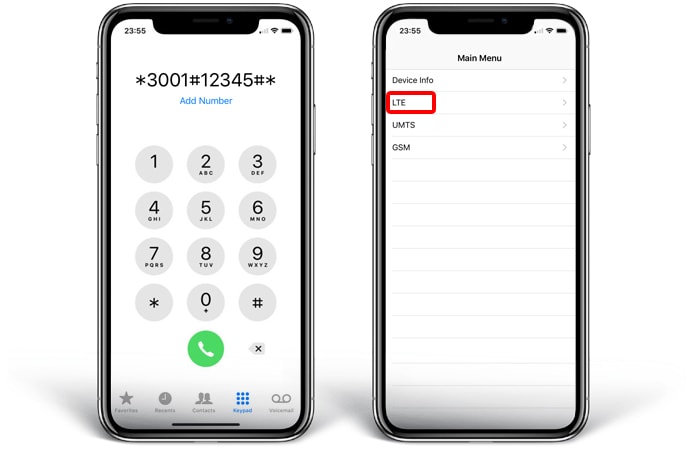
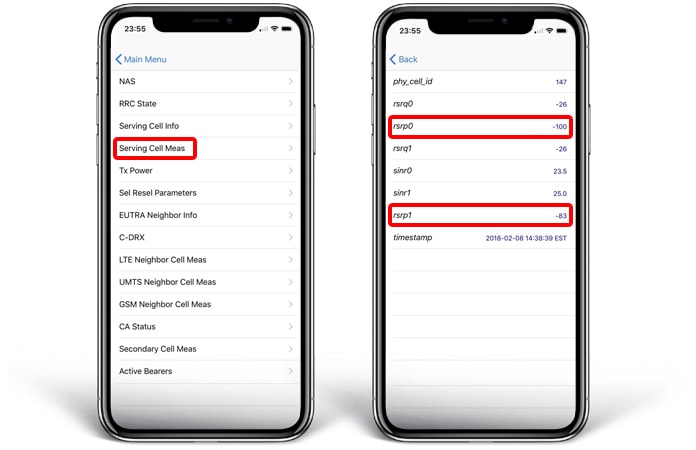
Step 3: For devices with Intel chip you need to go to LTE – Serving Cell Measure. The signal strength is identified as rsrp0 that means reference signal received power.
Step 3a: Depending on the chip on your iPhone, the menu will be different. For devices with Qualcomm chip you need to go to 1x EV-DO. Now see the true signal under the Rx AGCO section.
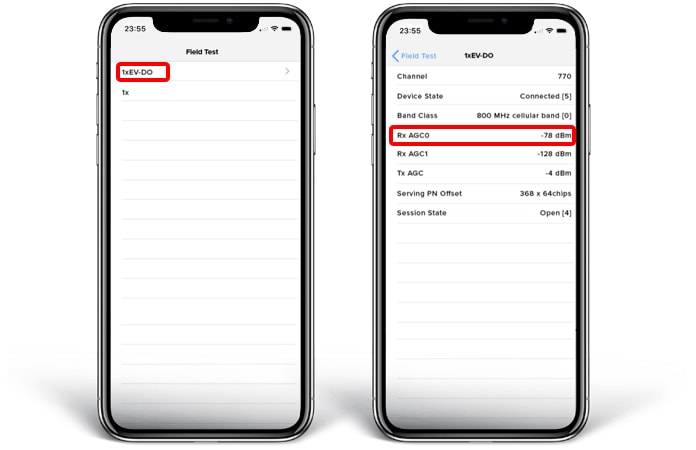
For now, let’s focus on rsrp0 number, which is going to be close to the digits that will showcase in the old iOS versions’ status bar. It should show as a negative number because that’s how the signal strength of dBm is measured. The closer it is to 0, the better the reception. The larger the negative number, the worst the reception.
Then, measure dBM with the ones in the following list. So, in our case, it is -100 for iPhone, meaning the reception is “Good.” The signal bar is also 4/4, which is because the fourth bar contains everything from Good to higher. Hence, even though the reception is good, the “Excellent” experience is rare, unless one is standing beside a cellphone tower.
- -90 dBm or higher = Excellent
- -91 dBm to -105 dBm = Good
- -106 dBm to -120 dBm = Fair
- -121 dBm to -124 dBm = Poor
- -125 dBm = No Signal
Please let us know what you think in the comments section below!

Field Test Mode on iPhone allows users to get detailed information on their cellular signal and cellular connection, and has long been a popular alternate method of displaying the cell signal on iPhones as a number instead of the signal bars or dots. Field Test Mode is undeniably for more advanced purposes, but some casual iPhone users found value in it as well in order to find a consistently reliable cellular signal.
But ever since iOS 11 and later and new iPhone models, Field Test Mode is different from how it used to be, and if you enter Field Test Mode in iOS 12 or iOS 11 you will not immediately see the numerical dBm cell signal indicator replacing the bars.
Not to worry, you can continue to see the cellular signal as numbers on iPhone with Field Test Mode in iOS 13, iOS 12, or iOS 11, it just works a bit differently than it did before in prior versions of system software.
Read on to learn how to access Field Test Mode in iOS 11.x or newer on any new iPhone, including iPhone 11, iPhone 11 Pro, iPhone 11 Pro Max, iPhone XR, iPhone XS, iPhone XS Max, iPhone X, iPhone 8, iPhone 8 Plus, iPhone 7 Plus, iPhone 7, and others.
How to Use Field Test Mode in iOS 13 / iOS 12 / iOS 11 to See Number Cell Signal Strength on iPhone
The iPhone must have an active cellular connection to be able to access and use Field Test Mode to measure the signal strength, the rest is easy:
-
Open the “Phone” app on your iPhone and enter the following number exactly:
*3001#12345#*
Look for “rsrp0” and the number corresponding will be the numerical measurement of the iPhone cellular signal strength in dBm
RSRP stands for Reference Signal Received Power and is a variation of RSSI measurement.
RSRQ stands for Reference Signal Received Quality.
Supposedly rsrp0 is the primary cell tower connected to, and rsrp1 is the next closest cell tower (or one with the strongest connection anyway), each obviously has their own cellular signal strength depending on power, connection, distance, interference, and other measures.
As for the numbers, which are measured in dBm, they will range from -40 to -130, with -40 being the best possible signal and -130 being the worst. Generally speaking, once you start approaching -110 or lower you will find the cell service is spottier and voice conversations may sound garbled or have aspects cutting out, whereas if you’re at -80 or so your signal should be pretty good and not have any issues.
Field Test Mode has a lot of data available, much of which is going to be completely useless or befuddling to the average iPhone user, much less anyone who is not a field test engineer or operator (and I am neither). For the geekier folks who are interested in numerical measurements of their cellular signal, “Serving Cell Meas” and “LTE Neighbor Cell Meas” are likely the two most pertinent sources of information, since both of those will reveal numerical cellular signals akin to what used to be displayed by default in Field Test Mode before iOS 11.
Note that accessing the dBm numerical cellular signal details may vary per iPhone model and cellular carrier, with some cellular providers not easily sharing this information through Field Test Mode. The approach above was walked through on an iPhone X with the latest iOS 11.x or later release on AT&T with an LTE signal, but if you want to view other GSM or UMTS signals then you’d look for the appropriate selection within the Field Test Mode app on iPhone.
And yes, at least at the consumer level, this is the only way to access Field Test Mode on the iPhone, and it has been that way for quite some time.
How do I get the signal numbers to replace the bars on iPhone X, iPhone 11, or iOS 13 / iOS 12?
Many users want to replace the bar signal indicator with the signal numbers instead, since the numerical reception indicator is more accurate. Unfortunately this is not possible in current versions of iOS or on the newest iPhone models with late iOS software. As of now, only iOS version before iOS 11 or later can use the numerical reception indicator as a replacement for the cell signal reception bars. If you want to learn how to do that on an earlier device with an older iOS release, go here to do so.
Do you have any other tips or helpful information for iPhone Field Test Mode with the latest iOS releases and newest iPhone models? Share them with us in the comments below.
Обычно пользователям для определения уровня принимаемого сотового сигнала хватает простого индикатора из нескольких полосок, расположенного в строке состояния. Но говорить об информативности такого инструмента не приходится. Если есть желание узнать реальную силу сигнала, то на помощь придет скрытое системное приложение iPhone Field Test.
Иногда пользователи смартфона удивляются: почему индикатор уровня сигнала показывает два деления, но веб-страницы при этом не загружаются? Или почему у одного человека четыре полоски, а у его соседа с другим телефоном – только две? Люди привыкли полагаться на показатели такого незамысловатого инструмента для определения уровня связи с сотовой сетью. На самом деле все эти полоски или бары несут мало смысла.
Более того, число полосок может оказаться вообще произвольным. Обычно большее их число все же означает более сильный сигнал, но при этом говорить о существовании какой-то стандартной шкалы нельзя. В итоге каждый производитель сам решает, какой уровень сигнала он соотносит с одним баром. Эти правила могут варьироваться еще и от модели к модели.
Если требуется точно узнать, насколько качественная связь в данном месте, требуется узнать конкретные показатели силы сигнала, измеренные в децибелах (дБ). На iPhone для этого даже не придется устанавливать дополнительную программу. Информацию даст скрытое системное приложение Field Test. Пусть это и не особенно удобно, зато просто и эффективно.
Как получить доступ к меню Field Test
Это меню постоянно эволюционировало вместе с iOS. Наше руководство точно подойдет тем, кто работает с iOS 11 или iOS 12.
Для начала откройте «Центр управления» или перейдите в «Настройки» и там выключите Wi-Fi. Теперь перейдите в приложение «Телефон» и в строке набора введите следующие символы (включая звездочки и решетки):
Нажмите кнопку вызова, после чего на экране появится меню приложения Field Test.
Как на iPhone узнать уровень сигнала сотовой связи в цифрах с помощью скрытого системного приложения Field Test
В приложении Field Test много пунктов, и они не все интуитивно понятны. Это и логично – меню предназначено не для обычных пользователей, а для инженеров сервиса.
Начните с выбора пункта LTE в «Главном меню» (Main Menu). Для измерения уровня сигнала в сетях 3G тоже необходимо выбрать раздел LTE.
Потом надо перейти в раздел Serving Cell Mass.
В нем будут находиться измерения параметров связи с той ячейкой сети, к которой вы в настоящий момент подключены. Переход в это меню приведет к появлению страницы с данными. Можно заметить, что значения параметров меняются каждые несколько секунд, обновляясь. Нам потребуется строка rsrp0. Речь идет о Reference Signal Received Power, мощности принятых пилотных сигналов от ближайшей вышки.
Но смартфон может оказаться подключенным и к вторичной, дополнительной станции. Тогда мощность сигнала будет отображена в разделе rsrp1.
Значение этого параметра должно быть отрицательным, в диапазоне от -40 до -140. Чем ближе оно к верхней границе (-40), тем сильнее сигнал приема. Близкое к -140 значение говорит о слабом сигнале. Значения от -40 до -80 говорят об уверенном приеме и отсутствии проблем со связью. Показатель ниже -120 должен вызывать тревогу. Пользователь может столкнуться с перебоями в связи и с низкой скоростью передачи данных.